


Who should attend
Engineers
Software, backend, platform and solutions engineers
Take an agent from notebook to production, and know what breaks once real traffic calls your tools.
Data scientists and ML engineers
Data scientists, ML and AI engineers, analytics leads
You already build models. Learn the layer around them: retrieval, orchestration, and evaluating outputs with no single right answer.
Product leaders and founders
Product managers, product directors, technical founders
Learn what an agent can automate and how to scope the work, well enough to tell a week from a quarter.
From reasoning models to production-ready agents
Every module pairs lecture with discussion and hands-on exercises. The program ends with a multi-agent application you build and keep.
Foundations
Week 01Tue, Jan 5The landscapeFrom next-token prediction to agents
Introduction to agentic AI
The map before the deep dives. Start with how a model learns its weights and predicts one token at a time, why tokenization sets your inference bill, and how chain of thought became built-in reasoning. See why a hallucination is usually a context problem you can fix, compare pre-training, fine-tuning and in-context learning as ways to give a model your own knowledge, then learn what separates an agent from rule-based automation and preview the planning, tool-use and reflection patterns the rest of the bootcamp builds.
Lecture · Discussion · Live demo
Week 02Tue, Jan 12UnderstandsTokens, embeddings and self-attention
Transformers & attention mechanism
Transformers from the ground up: tokenization, embeddings, positional encoding, and self-attention with keys, queries and values. Hands-on with Sentence Transformers, semantic search, and implementing attention scoring directly.
Lecture · Discussion · Practical exercise
Building blocks
Week 03Tue, Jan 19ChainsLangChain components, tools and LCEL
Mastering LangChain
Core components, output parsers, retrieval and vector stores, chains, tool use, and LCEL composition — the building blocks for assembling a retrieval application that holds together end to end.
Lecture · Discussion · Practical exercise
Week 04Tue, Jan 26RetrievesHybrid search, re-ranking and agentic RAG
Vector databases and agentic RAG
ANN against kNN search, hybrid dense-and-sparse retrieval with metadata filters, MMR re-ranking and HNSW index health — then vector stores as long-term agent memory, with multi-step retrieval loops and semantic caching for cost and latency.
Lecture · Discussion · Practical exercise
Agent design
Week 05Tue, Feb 2Manages contextMemory layers, routing and LangGraph state
Context engineering
Designing what the agent can see: retrieval, memory layers and critique loops; deterministic chains against router agents; LangGraph nodes, edges and state; and the multi-agent architectures — parallel, sequential, hierarchical — that keep a long workflow auditable.
Lecture · Discussion · Practical exercise
Week 06Tue, Feb 9PlansReflection, planning, tools and collaboration
Agentic design patterns
Reflection, planning, tool use and multi-agent collaboration as named patterns: what each one buys, what it costs in autonomy against control, and how to compose them into a hybrid workflow rather than picking one and hoping.
Lecture · Discussion · Practical exercise
Interoperability
Week 07Tue, Feb 16Talks to agentsMCP, A2A and ACP compared
Agentic AI protocols
Why agents need protocols at all — discovery, negotiation and state management across MCP, A2A and ACP, how their scope and message types differ, and which one fits a given workflow. Labs build an MCP client.
Lecture · Discussion · Practical exercise
Week 08Tue, Feb 23ConnectsTools, resources and prompts over MCP
Model Context Protocol
The "USB-C for AI": client-server handshake, resources, tools and prompts over JSON-RPC; exposing context with governance and controlled access; connecting MCP endpoints to planning and multi-agent patterns.
Lecture · Discussion · Practical exercise
Evaluation
Week 09Tue, Mar 2MeasuredBenchmarks, RAGAs and G-Eval
Evaluation of agents
Benchmarks (MMLU, HELM, BBH), text-quality metrics (BLEU, ROUGE, BERTScore), RAG-specific scoring with RAGAs, open-ended evaluation with G-Eval, plus ranking and reasoning metrics — measuring an agent before it meets real users.
Lecture · Discussion · Practical exercise
Capstone
Week 10Tue, Mar 9ShipsA multi-agent application you build and keep
Build a multi-agent LLM application
The capstone. Choose a project track — conversational orchestration, knowledge-enhanced agent, document-aware action agent, or MCP-coordinated collaboration — and ship a production-ready multi-agent application with provided datasets, guides and sandbox templates.
Lecture · Guided lab · Independent project
What you take home
A multi-agent application you build and keep
The program ends in a capstone. Pick a track and ship a production-ready multi-agent application, starting from the datasets, step-by-step guides and code templates in Data Science Dojo's sandbox. A year of sandbox access comes with it, so you can keep building after the last Tuesday.
- Conversational orchestration
- Knowledge-enhanced agent
- Document-aware action agent
- MCP-coordinated collaboration
Included
- 1 year
- Learner sandbox access
- Labs
- Agentic AI coding labs
- Datasets
- Industry-spanning document collections
- Certificate
- Verified certificate of completion
Learn from the people building this stack
Guest instructors and speakers
These are the guest instructors and speakers who have taught at past cohorts. Who joins any given cohort depends on their availability.
 Kartik TalamadupulaDistinguished ArchitectOracle
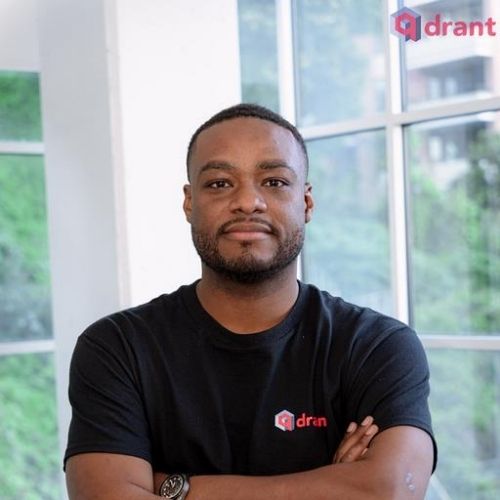 Thierry DamibaDeveloper RelationsQdrant
 Zain HasanStaff AI/ML Engineer, DXTogether AI
 Sage ElliottAI Engineer at UnionUnion
 Hamza FarooqFounderTraversaal.ai
 Shub ArghaSoftware EngineerArcade.dev
 Jerry LiuCo-founderLlamaIndex
 Sophie DalyStaff Data Scientist at StripeStripe
 Adam CowleyStaff Developer AdvocateNeo4j
 Rehan JalilPresident & CEOSecuriti
 Sebastian WitalecHead of DevRelWeaviate
 John GilhulyDeveloper AdvocateArize AI
Register early and save
Full refund up to five business days before your cohort starts, or transfer to a later date at no charge.
Then $2,400 (20% off) from Nov 25.
This is the last discount tier — enrollment closes when the cohort begins.
Exact dates and early-bird pricing will be announced soon. Register your interest and we'll notify you when enrollment opens.
- Live sessions with industry experts
- 1-year access to learner sandboxes
- Access to the agentic AI coding labs
- Verified certificate upon completion
- Access to companion course content for review at your convenience
4.95 from 660+ verified reviews
The most thrilling revelation for me was the multi-step problem-solving approach that mirrors human thinking, offering limitless applications with creative usage of LLMs. I now feel empowered to tackle complex challenges at work with the knowledge gained from this enriching experience.
 Aishwarya Raman — read the full review (opens in a new tab)Senior Software Engineer, Microsoft Azure
The hands-on nature of the bootcamp ensured that knowledge learned was knowledge retained.
 Amity Fox — read the full review (opens in a new tab)LLM bootcamp alum
In my 25-year IT career, this has been one of the most enjoyable learning experiences.
 Victor Green — read the full review (opens in a new tab)LLM bootcamp alum
The Data Science Dojo LLM Bootcamp is a hands-on experience, delving into LLMs and their real-world applications. Expert instructors provide a comprehensive framework with a practical focus, enabling you to fine-tune, evaluate, deploy, and monitor LLM applications.
Bernard Tumanjong — read the full review (opens in a new tab)Chief Operations Analysis, US Space Force Coming from a linguistics background, the Large Language Model Bootcamp provided me with cutting-edge insights into language and data science. Now equipped with practical knowledge, I'm excited to implement these learnings at Starbucks. Whether you're well-versed in development or just starting with Python, this boot camp caters to diverse skill levels.
 Erika Davis — read the full review (opens in a new tab)Senior Business Reporting Analyst, Starbucks
Hear it in their own words
David MartinsCo-Founder, Notify Dave HortonVP Solutions Engineering, Odaseva Maryam BagheriSr. Data Scientist, Deloitte Business Abrar BhuiyanFull-Stack Software Engineer, ICF
Frequently asked questions
How is the agentic AI bootcamp different from the LLM bootcamp?
Who is the agentic AI bootcamp for?
Are there any prerequisites?
I don't have a background in Python. Can I still join?
I am from a non-technical background. Is this bootcamp for me?
What does the preparatory material include?
- LLM architectures: foundation models, prompts, embeddings, fine-tuning
- Challenges and risks: prompt brittleness, context limits, security, cost
- Transformers and attention: self-attention, multi-head attention, tokenization
When will I receive the preparatory material?
How long is the bootcamp?
How much does the agentic AI bootcamp cost?
Are the sessions live?
What if I'm unable to attend a live session?
What is included?
- Live sessions with industry experts
- 1-year access to learner sandboxes
- Access to the agentic AI coding labs
- Access to companion course content for review at your convenience
- Verified certificate upon completion
Will I receive a certificate?
Do I need my own API keys?
What is the transfer policy for the bootcamp?
What is the refund policy?
Will I get a job after completing the bootcamp?
Looking to upskill your team?
Corporate cohorts, private training, and volume pricing for teams of five or more.